The Future Self Reflection
Disclaimer: This post is an AI-assisted, reflective thought experiment. It is not legal advice, mediation, or a substitute for professional acoustic assessment. Its purpose is to explore shared-building sound with perspective and practical agency.
The Thought Experiment
Five years from now, you’re advising someone younger.
They ask:
“What matters most when choosing a place?”
You pause.
You remember a place that was peaceful but isolating.
Another that was lively but imperfect.
One that was affordable but carried every footstep from above.
Do you say:
Silence?
Location?
Community?
Price?
Safety?
Flexibility?
What’s Actually Happening?
In multi-dwelling buildings:
Impact sound (footsteps, dropped objects) travels through structure.
Airborne sound (voices, music) travels through air gaps and shared walls.
Plumbing often travels vertically through service shafts.
Louder doesn’t always mean closer — low frequencies and structure-borne vibration can feel more intrusive than they measure.
Buildings distribute energy.
Reality Frame
Shared walls mean shared physics.
Sound does not automatically equal disrespect.
Most neighbours are living ordinary lives inside structures that are efficient at carrying sound energy.
Your Agency
If sound is one variable among many, you have options.
Consider:
• Choosing top-floor units if impact noise is hard for you
• Asking about building type (concrete vs timber)
• Visiting at different times of day before signing
• Factoring “sound tolerance” into your overall housing equation
Sound becomes a criterion — not a fixation.
Final Thoughts
Shared living is imperfect.
The goal isn’t total silence.
It’s an environment your nervous system can live in sustainably.
You’re allowed to value quiet.
You’re also allowed to weigh it alongside cost, safety, warmth, sunlight, commute, and community.
Future you doesn’t chase perfection.
Future you chooses alignment.
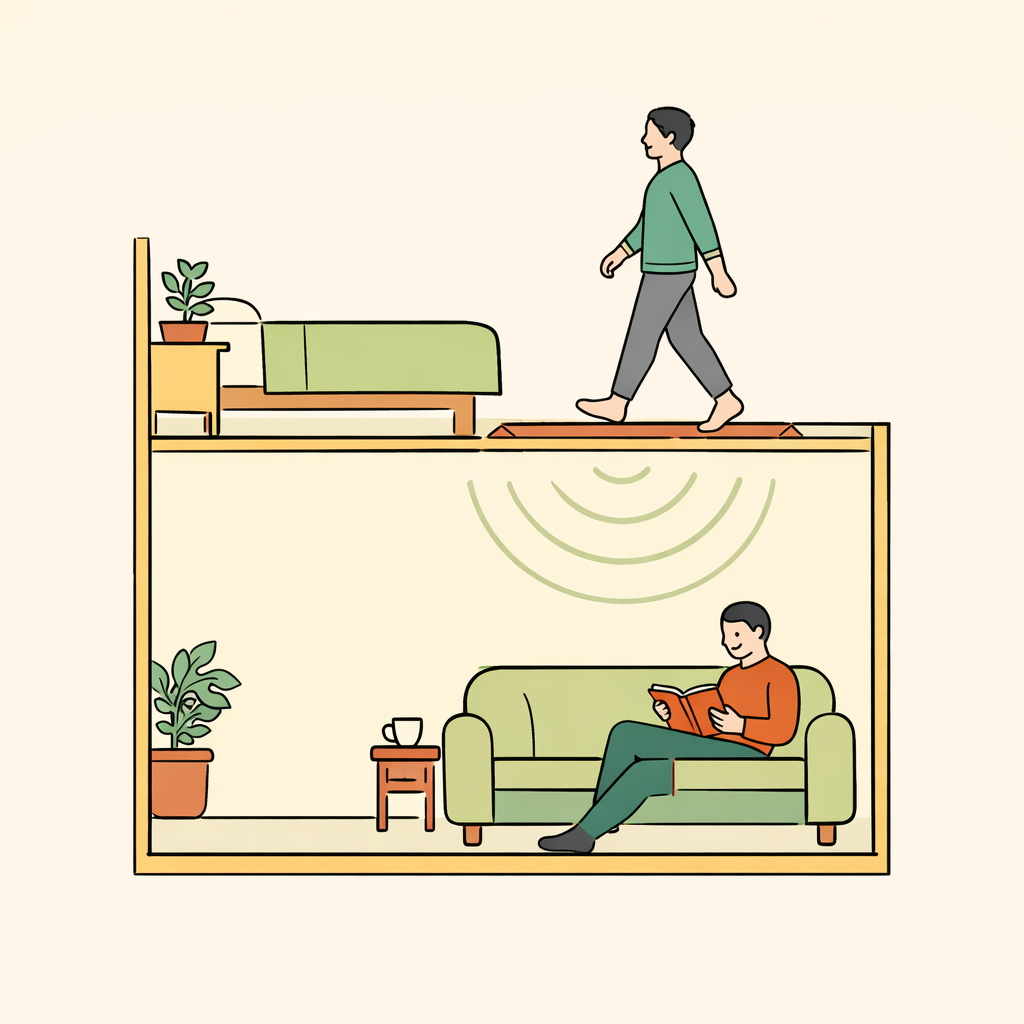
Everyday sounds travel through buildings.
Understanding them helps us live together with more ease.