When Sound Gets Loud, Let the Other Senses In
Disclaimer: This article was created with the assistance of AI and carefully reviewed to ensure it reflects the tone, intent, and principles of the Thin Walls platform.
Sometimes it’s not just the sound.
It’s what the sound does to the rest of you.
The way your shoulders lift slightly without asking.
The way your thoughts sharpen.
The way your body starts to brace, even when nothing is “wrong.”
When we talk about sound in shared spaces, we often focus on the source.
Where it’s coming from. How to reduce it. How to stop it.
But there’s another layer that’s easy to miss:
What if the goal isn’t to remove the sound completely,
but to support yourself while it’s there?
A small shift
Sound is only one of your senses.
When it becomes dominant, everything else can fade into the background.
The world narrows.
But your body doesn’t just listen.
It feels. It smells. It sees. It tastes.
And sometimes, gently bringing those senses back online
can soften the experience of sound without needing to fight it.
Rebalancing, not escaping
This isn’t about distraction.
It’s about giving your system more than one thing to hold.
A lavender plant on a balcony.
The scent is subtle, but steady.
A cup of mint tea.
Warm in your hands, cooling as you sip.
A hot shower.
Water moving across your skin, grounding you back into your body.
A blanket around your shoulders.
Soft pressure, a sense of containment.
A hot water bottle.
A quiet, steady warmth.
Ocean waves playing softly from a screen.
Not to replace the noise, but to sit alongside it.
None of these remove the sound.
But they change the context your body experiences it in.
Expanding the frame
When sound is the only thing in focus, it can feel overwhelming.
When other senses are present, the experience becomes more layered.
Less sharp.
Less absolute.
Not perfect.
But different.
A gentle experiment
Next time the sound feels a little too close,
pause for a moment and ask:
What else can I bring into this space?
Not to fix it.
Just to accompany it.
You’re not trying to win against the environment.
You’re learning how to live inside it,
with a little more support.
And sometimes, that shift is enough to make the moment feel
a bit more spacious than it did before.
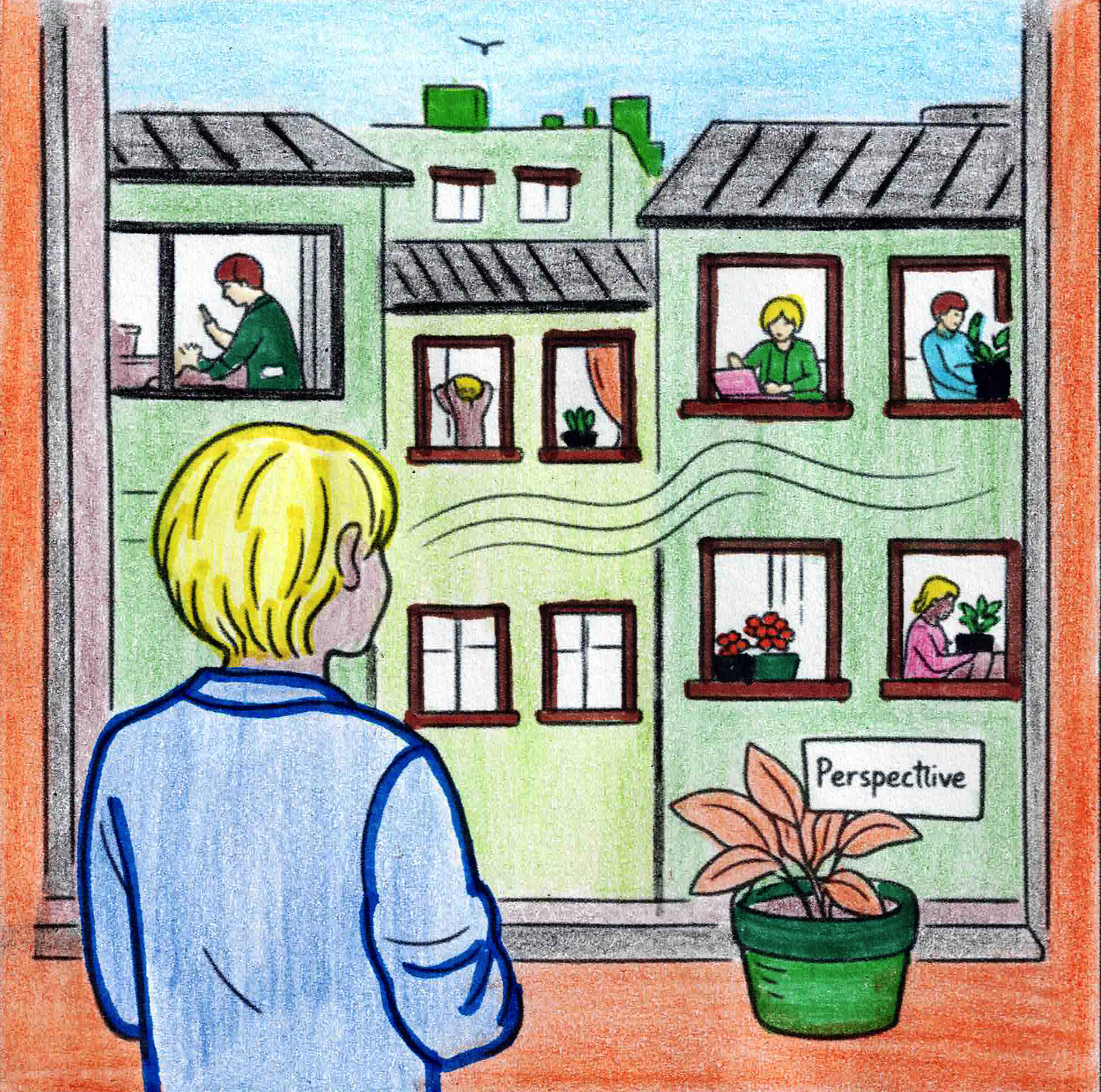
When one sense overwhelms, invite the others back in.